Direct answer
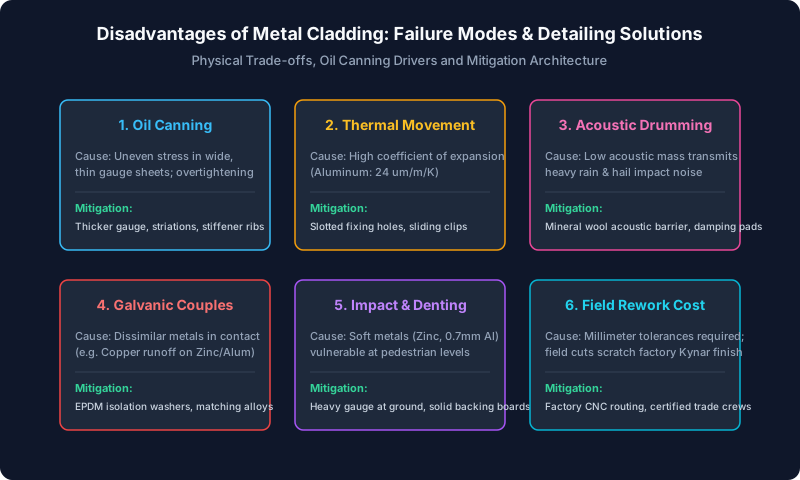
The primary disadvantages of metal cladding include optical oil canning in broad flat sheet profiles, high thermal expansion rates requiring slotted sliding fixings, poor acoustic dampening against precipitation noise, susceptibility to galvanic corrosion from incompatible fasteners, and low impact resistance at pedestrian levels. These are not material defects but predictable physical characteristics that must be addressed during architectural detailing.
Key takeaways
- Oil canning is an inherent optical distortion in thin-gauge metal panels, mitigated by heavier gauges, narrower panel widths, and pencil ribs.
- Aluminum expands at approximately 24 µm/m/°C, requiring oversized holes and sliding clip hardware to prevent structural binding.
- Rain impact noise (acoustic drumming) requires high-density mineral wool insulation and dampening pads in the rear cavity.
- Contact between dissimilar metals (such as carbon steel fasteners or copper runoff on aluminum panels) triggers rapid galvanic destruction.
Metal cladding—including aluminum composite material (ACM), standing seam zinc, pre-painted galvanized steel, and copper wall panels—is celebrated for crisp modern aesthetics, non-combustibility, and low maintenance. However, as detailed in our comprehensive metal wall coverings guide and the Design Specification Hub, every facade material involves structural and architectural trade-offs.
When specifiers fail to anticipate the unique physical properties of sheet metal, building envelopes suffer from visible distortions, distressing popping noises during sunny temperature swings, galvanic degradation, and unsightly denting.
1. Oil Canning: Visible Surface Distortion
Oil canning is the perceived waviness or rippling observed across flat areas of architectural metal panels. It is particularly noticeable under oblique morning or late afternoon sunlight:
- Root Causes: Uneven stresses introduced during coil manufacturing, differential thermal expansion between panel edges and face, misaligned sub-framing, and overtightened mechanical fasteners that bind the panel.
- Why It Matters: While oil canning does not compromise the structural integrity or waterproofing of the rainscreen, building owners frequently reject completed facades as defective craftsmanship. Review our dedicated guide on oil canning mitigation in metal panels for field tolerances.
- Specification Mitigations:
- Specify heavier sheet gauges (e.g., upgrade aluminum from 0.8 mm to 1.0 mm or 1.2 mm).
- Limit flat panel widths to under 300 mm (12 inches) or introduce longitudinal pencil ribs, striations, or embossed surface textures to break up light reflection.
- Specify tension-leveled architectural coils and low-gloss matte metal panel finishes (e.g., 20% to 30% gloss level) rather than high-gloss coatings, in accordance with Metal Construction Association (MCA) technical bulletins.
2. Thermal Movement and Expansion Noises
Metals have high coefficients of linear thermal expansion compared to concrete, brick, or structural steel:
- Aluminum: Expands at approximately 24 × 10⁻⁶ / °C (a 6-meter panel of aluminum wall panels undergoes over 7 mm of expansion across a 50°C summer-to-winter temperature differential).
- Zinc: Expands at 22 × 10⁻⁶ / °C, requiring sliding seam clips as outlined in our zinc wall cladding guide.
- Carbon Steel: Expands at 12 × 10⁻⁶ / °C.
If panels are pinned tightly to rigid steel sub-girts with fixed screws, the expanding panel will buckle into oil canning during hot afternoons and produce loud acoustic popping or ticking sounds as the fasteners slip against the framing under thermal stress. Detailing requires a designated fixed point paired with slotted fastener holes and sliding clips to accommodate continuous thermal movement within ventilated metal rainscreen cladding systems.
3. Acoustic Drumming During Heavy Precipitation
Unlike heavyweight masonry or insulated concrete forms, single-skin metal cladding provides minimal mass damping. Heavy rainfall, hail, or strong wind-borne debris striking thin-gauge metal panels creates an acoustic resonance phenomenon known as drumming:
- In residential or quiet commercial occupancies (such as libraries, corporate boardrooms, or hotels), sound levels can exceed 65 dB(A) inside the perimeter envelope.
- Acoustic Detailing: Specifiers must pack the cavity with high-density mineral wool insulation (≥ 45 kg/m³) directly behind the rainscreen cavity and detail acoustic decoupling elastomeric pads between sub-framing brackets and the structural backup wall.
4. Galvanic Corrosion and Chemical Incompatibility
Metals possess different electrochemical potentials on the galvanic series. When two dissimilar metals are placed in electrical contact in the presence of an electrolyte (rainwater or coastal sea-spray):
- Galvanic Attack: The more active anode metal corrodes rapidly while protecting the cathode.
- Classic Detailing Disasters:
- Fastening aluminum panels with plain carbon steel or 410-series screws produces rapid pitting and fastener failure. Fasteners must be AISI 304/316 stainless steel with vulcanized EPDM isolation washers.
- Copper runoff from higher-level roofs or gutters directed over zinc or aluminum cladding causes immediate brown pitting and perforation within 24 to 36 months.
- Alkaline runoff from unsealed concrete or mortar splash chemically strips factory fluoropolymer (PVDF / Kynar 500) paint finishes.
5. Vulnerability to Impact and Hail Denting
Thin-gauge metals (particularly copper, titanium-zinc, and standard aluminum standing-seam profiles) possess relatively low yield strengths against point impacts. At ground level, shopping carts, maintenance ladders, and pedestrian traffic cause irreversible dents that cannot be repaired without replacing the entire panel run. In severe hail zones, hail stones larger than 25 mm (1 inch) leave permanent dimples across standing seam facades.
For ground floors and accessible building plinths, specifiers should incorporate heavy solid aluminum plate (≥ 3 mm) or utilize durable masonry and composite stone panels up to a 3-meter datum line before transitioning to sheet metal cladding above. Standardized testing for hail impact is documented by ASTM International under ASTM E822.