Direct answer
Aluminum wall panels are architectural cladding panels formed from rolled aluminum alloy sheet or from composite material with thin aluminum skins. Low density — about one third of steel — plus a self-healing oxide film and the widest factory finish range of any cladding metal make aluminum the default specification for facades, rainscreens and interior feature walls. The working decisions sit below that default: 3000-series alloys for general coil-coated work versus 5000-series for marine exposure and consistent anodizing; PVDF, powder coat or anodizing depending on colour range, warranty structure and repairability; galvanic isolation from copper runoff, steel subframes and wet concrete; and joints sized for thermal movement roughly twice that of steel. Aluminum costs more than coated steel as material, gives some of it back in lighter subframes and handling, and recycles at end of life without losing properties.
Key takeaways
- Aluminum weighs roughly one third as much as steel for the same volume, which reduces substructure, transport and handling costs — decisive on renovation over structure with little spare capacity.
- 3000-series alloys are the coil-coated workhorse; 5000-series buys chloride resistance for coastal work and more uniform anodizing. Name alloy and temper in the spec.
- A natural oxide layer gives aluminum good corrosion resistance; the real risks are galvanic — copper runoff, wet contact with steel or curing concrete — and are solved by detailing, not coating.
- PVDF gives the widest stable exterior colour and warranty structure; powder coat gives depth and texture; anodizing wears instead of peeling but cannot be field-repaired and needs a batch strategy.
- Aluminum is delivered as single-skin sheet, cassettes, corrugated profiles, perforated screens, expanded mesh and MCM skins — pick material and system together.
- Thermal expansion about twice that of steel drives joint width, slotted fixings and one fixed point per panel; softness drives gauge and format choices near grade.
- Aluminum recycles repeatedly without property loss, and recycled content can be requested and documented — a legitimate selection factor, not a marketing line.
| Criterion | Typical range | Note |
|---|---|---|
| Weight | Low | ≈ 2.7 g/cm³, about one third of steel |
| Corrosion resistance | Good | Self-forming oxide layer; coatings extend life |
| Galvanic sensitivity | High | Anodic to copper and steel; isolation details required |
| Thermal movement | High | About twice steel; joints and fixings must absorb it |
| Impact resistance | Moderate | Softer than steel at equal gauge; compensate near grade |
| Formability | Excellent | Folds, curves and machines cleanly; wide format range |
| Fire behaviour | Non-combustible as solid sheet | Composite panels depend on core type |
| Recycled content | High and documentable | Recycles without property loss; ask suppliers to document |
| Maintenance | Low | Periodic washing; coating inspection |
| Relative cost | Medium to high | Above coated steel, below zinc or copper |
Aluminum is the usual metal on architectural walls because it is light, it does not rust the way carbon steel does, and it takes more factory finishes than the other cladding metals. That is a practical default, not a style rule. If those traits do not match the wall, pick another metal from the materials hub. Industry context is published by the Aluminum Association.
What aluminum wall panels are
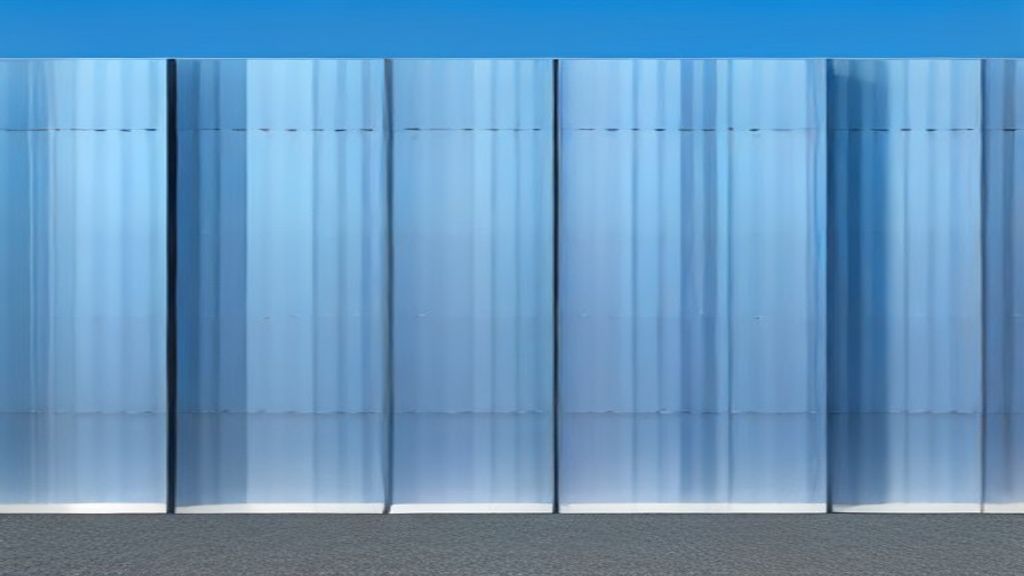
Architectural aluminum panels are made from rolled alloy sheet. A natural oxide film gives baseline corrosion protection and reforms wherever the surface is cut or scratched. Factory finishes such as PVDF, polyester powder coat, or anodizing are the working surface — they carry the colour and the warranty. Single-skin facade products are commonly about 1.5 mm to 4 mm thick, depending on panel size and stiffening; composite panels use much thinner skins bonded to a core.
Which alloy and temper should the spec name?
“Aluminum” is not a specification. Architectural sheet comes almost entirely from two alloy families, and the choice is a real decision:
- 3000 series (aluminum–manganese) is the coil-coated workhorse. It forms cleanly, stays flat, and takes PVDF coil coating well. For most inland commercial facades it is the correct default.
- 5000 series (aluminum–magnesium) is stronger and markedly more resistant to chloride attack. Specify it within a few kilometres of salt water, near heavily salted roads, and wherever anodizing quality matters — 5000-series sheet anodizes more uniformly than 3000-series, which can show streaking under a clear anodic film.
Temper matters as much as alloy: harder tempers hold flatness on large faces, softer tempers fold to tight radii without cracking. The fabricator will have a preferred alloy–temper pairing for each panel format; the spec’s job is to fix the family and exposure grade and require the manufacturer’s tested data for the rest. What the spec should not do is say “aluminum, mill option” and hope.
Anodized, PVDF, or powder coat?
The finish decision is covered in depth in metal panel finishes; here is the aluminum-specific short version, in project terms rather than chemistry.
PVDF coil coating has the widest stable exterior colour range, including metallics and micas, and the most mature warranty structure — long film-integrity and colour-retention terms are routine from major coaters. It is the default for large coloured facades. Field touch-up is cosmetic at best, so ordering all coil from one batch per elevation is the batch-matching strategy.
Powder coat gives deeper colours, textures and thicker films, often at lower cost, and suits fabricated cassettes finished after folding. Warranty classes vary widely between applicators — ask which tested class the quote actually meets (the AAMA 2603/2604/2605 ladder is the usual reference) rather than accepting “architectural powder coat” as a grade.
Anodizing converts the surface into a hard oxide layer: the finish is the metal, so it wears and dulls rather than peeling. The palette is narrow — clears, bronzes, blacks and a few electrolytic tones — and batch-to-batch colour variation is real. Require range samples, keep each elevation within one anodizing lot, and understand that field repair is impossible: damaged anodized panels are replaced, which is the argument for attic stock.
How does aluminum actually corrode?
Atmospheric corrosion rarely governs an aluminum wall. The failures that reach site meetings are galvanic and detail-driven, and they belong to the same logic as the rest of metal cladding corrosion:
- Copper runoff pits aluminum. Aluminum is anodic to copper, so drainage from copper flashings, copper roofs, or copper-bearing treated lumber must never wash over an aluminum wall. Check what sits upstream in every drainage path.
- Wet contact with steel does the same, slower. Separate aluminum panels from carbon-steel subframes with isolation tape or barriers at contact points, and make stainless steel fasteners the default fixing.
- Wet contact with concrete and mortar attacks the surface (poultice conditions under alkaline slurry). Hold bottom edges out of splash zones, keep panels off curing concrete, and protect stored panels from mortar wash during construction.
One genuine advantage over coated steel: a cut edge on aluminum sheet is still aluminum. The oxide reforms, and there is no red-rust creep from edges — a recurring maintenance item on coated steel in aggressive exposure.
Maintenance follows the same logic. The metal needs nothing; the finish needs washing on a schedule the coating warranty usually requires, more often in coastal or industrial air where salt and grime accumulate under overhangs that rain never rinses. Those sheltered zones — soffits, deep reveals, the underside of parapets — are where chloride sits and where inspection should start.
Movement, flatness, and dents
Aluminum’s thermal expansion is roughly twice that of steel. On a long elevation that difference is not academic: it sets joint widths, demands slotted fixing holes with one fixed point per panel, and rules out sealant details that cannot cycle. Ignore it and the wall reports back as buckled joints or as waviness on large flat faces — the mechanics are covered in oil canning in metal panels, and flatness expectations should be written against an approved mockup, viewed at a stated distance and lighting, not argued after installation.
Softness is the other constraint. At equal gauge, aluminum dents where steel wall cladding shrugs. Near grade, at loading areas and along walkways, the options are a thicker gauge, a stiffer profiled or cassette format, or a deliberate material switch for the impact band. Whatever the choice, prefer a mechanically fixed format there so a damaged panel comes off one-for-one — which is another argument for attic stock from the original finish batch.
Which systems consume aluminum?
The same coil becomes different products once a system is chosen, so material and format should be picked together on the systems hub:
- Single-skin metal panels — flat or brake-formed sheet; the simplest format, and the one where oil canning needs the most attention.
- Metal cassette panels — folded trays with concealed fixings, the standard commercial-facade format, usually hung on a ventilated rainscreen subframe.
- Corrugated and profiled panels — profile stiffness lets the sheet run thinner.
- Perforated metal panels and expanded metal mesh — parking structures, equipment screening, daylight filtering; aluminum’s machinability keeps perforation edges clean.
- Metal Composite Material panels — two thin aluminum skins bonded to a core for large, dead-flat fields. The abbreviation is unpacked in what MCM means in cladding, and the fire classification belongs to the core and the tested assembly, per metal wall panel fire performance. Solid aluminum sheet itself is non-combustible.
Weight, fabrication, and end of life
At about one third the density of steel, aluminum lowers dead load, not wind load — but dead load is what matters for subframes, crane time and handling. Two installers carry a cassette that would need lifting gear in steel, and on renovation over an existing structure with little spare capacity, the weight math often decides the metal before aesthetics enter the room.
Fabrication is the quiet advantage. Aluminum folds to tight radii, curves to rolled profiles, and machines and perforates cleanly, which is why the most sculptural facade work defaults to it. Complex returns and one-off flashings are cheaper to get right in aluminum.
End of life is now a legitimate selection line, stated factually: aluminum recycles repeatedly without losing its properties, building-sector scrap is recycled at high rates, and secondary production takes a small fraction of the energy of primary smelting, per the Aluminum Association’s recycling data. Recycled content in architectural sheet varies by supplier, so ask for it in documentation rather than assuming it.
Writing the aluminum spec — and when to walk away
The specification checklist on this page is the working summary: alloy and temper named, finish class and warranty terms split out, one batch per elevation, isolation details drawn, movement joints calculated, gauge stepped up in impact zones, mockup-based flatness acceptance, attic stock. Cost sits above coated steel as material and claws some back in structure and labour — the framework is in metal cladding cost, and the head-to-head fork is aluminum versus steel wall panels.
Walk away from aluminum when the elevation is large, simple and budget-led — coated steel usually wins there — or when the project wants a living patina rather than a factory finish, which points to zinc or corten on the materials hub. Everything else — most commercial facades, ventilated rainscreens, interior feature walls, weight-sensitive renovation — is aluminum territory. The complete metal wall coverings guide is the map across material, system and application, and the rest of the trade-offs live on the comparisons hub and the design and specification hub.
Specification checklist
- Alloy and temper named explicitly — no 'or equal' on the metal itself
- 5000-series alloy required for coastal or de-icing-salt exposure
- Finish system and class stated: PVDF, powder or anodized, with the warranty class to match
- Warranty terms split out: film integrity, colour retention and chalk are separate numbers
- Single production batch (coil run or anodizing lot) per elevation; range samples approved before release
- Galvanic isolation detailed: no copper upstream in drainage paths, barrier between aluminum and steel subframe
- Stainless steel fasteners specified as the default compatible fixing
- Bottom edges held clear of splash zones and separated from concrete and mortar
- Joint widths and slotted fixings sized from calculated thermal movement, one fixed point per panel
- Gauge or panel format upgraded in impact zones near grade
- Flatness and oil-canning acceptance criteria written against an approved mockup, with viewing distance and lighting stated
- Fire performance requested as tested-assembly evidence, not panel data alone
- Recycled content and end-of-life take-back documented by the supplier
- Attic stock from the original batch for future one-for-one replacement
Frequently asked questions
Are aluminum wall panels suitable for coastal environments?
Generally yes. Aluminum performs well in coastal air compared with plain steel, but marine-grade 5000-series alloys, sealed or coated cut edges and a suitable finish system should be specified, and fixings must be compatible to avoid galvanic corrosion.
Do aluminum panels dent more easily than steel?
Aluminum is softer than steel at the same thickness, so specifiers compensate with thicker gauge, stiffeners or panel forms such as cassettes and corrugated profiles that add rigidity. Near loading docks and walkways, some projects switch to steel for the impact band and keep aluminum above.
What aluminum alloy should a cladding spec name?
For general coil-coated facade sheet, 3000-series alloys are the industry workhorse: formable, stable and well suited to PVDF coil coating. For coastal exposure or where anodizing consistency matters, 5000-series alloys are the upgrade. Name the alloy and temper in the spec and confirm availability against the manufacturer's tested data rather than leaving it as 'mill option'.
Can anodized aluminum panels be repaired in the field?
No. Anodizing is a converted layer of the metal itself, so a scratch or weld cannot be re-anodized in place; damaged panels are replaced, not touched up. Painted finishes accept cosmetic touch-up. This is why anodized projects should carry attic stock from the original anodizing lot.
Can aluminum panels be fixed directly to a steel subframe?
Not in wet or exterior conditions without separation. Aluminum is anodic to steel, so trapped moisture at the contact drives galvanic attack of the aluminum. Standard practice is an isolation tape or barrier at contact points and stainless steel fasteners. Dry interior work is more forgiving but the same details cost little.
Does recycled aluminum perform worse than primary aluminum?
No. Aluminum recycles repeatedly without degrading its properties, and architectural sheet routinely contains recycled metal. What matters to the wall is the alloy, temper and finish, which are controlled regardless of recycled fraction. Recycled content is worth requesting in documentation because it varies by supplier.
Sources
- Aluminum Association — industry resources — The Aluminum Association Accessed August 25, 2026.
- Metal Composite Material — Metal Construction Association Accessed August 25, 2026.
- Aluminum Recycling — The Aluminum Association Accessed August 27, 2026.
- Metal Panel Wall Systems — Whole Building Design Guide Accessed August 27, 2026.