Direct answer
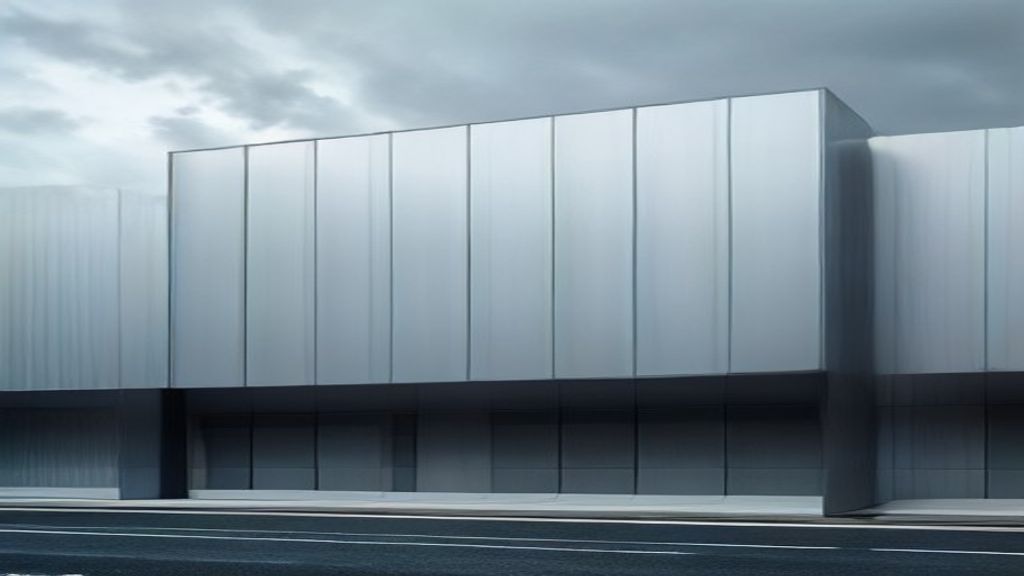
Metal cassette panels are folded metal trays: a flat face with edges folded back into returns, hung on concealed clips or rails so no fasteners show on the face. The folds stiffen the sheet, which is why a cassette holds a flatter face and a crisper joint line than the same metal used as a flat sheet. Cassettes are a format, not a material — they are folded from aluminum most often, and also from steel, zinc, or fabricated Metal Composite Material. Choose cassettes when the joint grid and the shadow line of the return are part of the architecture and the budget carries shop fabrication and shop drawings. Choose profiled single-skin when cost and coverage dominate, and composite panels when you need larger, flatter faces at lower weight.
Key takeaways
- A cassette is a folded tray with returned edges and concealed fixing, not a synonym for rainscreen.
- Folding buys stiffness. Returns and stiffeners are how cassettes hold flatness a flat sheet cannot.
- Hook-on cassettes adjust on site and swap individually; face-fixed trays are cheaper but show fixings and give up adjustability.
- Joint design is a decision, not a default — open drained joints need a cavity that manages water; gasketed joints need seals someone will maintain.
- Module and tolerance errors accumulate down an elevation. Cassette jobs are won or lost in shop drawings.
- Aluminum dominates folding; steel and zinc fold too, with tighter limits on radius, finish and weight.
- Write fold radii, return depths, clip engagement and panel line tolerances into the spec as values the fabricator must confirm.
| Criterion | Typical range | Note |
|---|---|---|
| Weight | Higher than a thin flat skin | Returns and clips add metal. |
| Flatness | Good to excellent | Folds and stiffeners resist oil canning better than flat sheet. |
| Durability | High when fabricated well | Open corners collect dirt and water. |
| Corrosion | Follows metal and wet details | Dissimilar clips need isolation. |
| Fire | Format-neutral | Core and insulation still govern if present. |
| Maintenance | Individual trays can be replaced | Access to clips must be designed. |
| Installation | Shop-heavy, site-precise | Module errors accumulate. |
| Cost | Higher fabrication share | Corners and custom sizes dominate. |
Metal cassette panels are folded trays used as a modular format on architectural walls. They belong with the other panel systems on the metal wall coverings map. The Metal Construction Association composite page is relevant when the tray is fabricated from a bonded sheet. It does not define every cassette.

What exactly is a cassette?
A cassette is a pan with returned edges. The face is folded back on all four sides, the returns give the panel depth, and clips or hooks on those returns catch a rail behind the wall face. Nothing penetrates the visible face, so the elevation reads as clean metal and shadow lines. The visual thickness of the return is part of the elevation — a 25 mm return and a 50 mm return are different facades.
Trays can be aluminum wall panels plate, coated steel, zinc, or Metal Composite Material panels folded by a fabricator. The format is shared. The material is not. When a drawing says “cassette,” the first questions are what metal, what thickness, and what fixing — the word alone answers none of them.
Why does folding buy flatness?
A flat sheet resists bending only through its own thickness. Fold the edges down and the panel becomes a shallow structural pan: the returns act as edge beams, the face spans between them, and the whole tray is dramatically stiffer than the parent sheet. That stiffness is why cassettes are used where single-skin metal panels would oil-can as large flats, and why cassette joints stay straight — the returned edge is a folded line, not a cut edge, so it reads crisp from the street.
Stiffness is not immunity. Big glossy faces still need oil canning expectations set in writing, and large trays get bonded stiffeners on the back. The fold buys you margin; it does not repeal the physics.
Hook-on or face-fixed?
Two fixing families cover most cassette systems.
Hook-on (rail) systems fold or fit hooks into the top return, which drop over horizontal rails on the subframe. Adjustment screws set line and level. Benefits: concealed fixing, site adjustability to absorb structure tolerance, and — in many systems — individual removability. Costs: the rail layer, the engineering of clip and rail together, and the discipline to install them straight.
Face-fixed trays screw or rivet through a flange or through the face itself into the subframe. Cheaper, simpler, faster. The penalties are visible fasteners (or cover trims), less adjustment, and a removal sequence that depends on fastener access. Face-fixing is common on budget-driven and interior work; hook-on dominates high-visibility facades.
Many cassette walls are metal rainscreen cladding. If the drawings show a cavity, weeps and a barrier, call the wall a rainscreen. If they do not, do not use the word.
Open joints or gaskets?
The joint is a design decision with a maintenance tail.
Open drained joints leave a gap — commonly a consistent reveal — between trays and let water enter. The cavity behind, the returns themselves, and the water-resistive barrier manage what gets through. Nothing to reseal, ever, but the design must accept water behind the face and drain it deliberately. This is the standard rainscreen logic and the reason returns matter: they baffle wind-driven rain at the joint.
Gasketed or sealed joints close the gap with extruded gaskets or sealant. They reduce water entry and can suit exposed coastal or high-rise conditions, but every seal is a future maintenance item, and a failed hidden gasket is worse than an honest open joint. If joints are sealed, name who inspects and replaces the seals, and on what cycle.
Do not mix logics by accident. An “open joint” wall with no functioning cavity drainage is just a leaky wall.
Where do cassette projects go wrong?
Tolerances and coordination, almost always.
A cassette grid is unforgiving. Module mistakes stack down a long elevation: a few millimetres of drift per bay becomes a visibly tapering joint by the corner. The structure behind was built to structural tolerance, the cassettes to fabrication tolerance, and the rail-and-clip layer must absorb the difference. That absorption is designed in shop drawings, not improvised on scaffold.
Expect the shop-drawing package to be large and to matter. Every atypical tray — corners, opening heads, jambs, sills, parapet closures, penetrations — is drawn, checked against field dimensions, and fabricated before it can be hung. Openings and corners are where cassette systems fail in the shop; budget the atypical trays. Late window changes reprice the facade. Sequence matters too: on many hook-on systems trays install in order, so a wrong tray discovered mid-elevation stalls the wall. The Whole Building Design Guide metal panel wall systems reminder applies: the tray is one layer, and the barrier, cavity and subframe behind it are separate scopes that need installation coordination between trades.
Acceptance criteria belong in the spec: joint width tolerance, panel alignment across joints, and a viewing distance and lighting condition for judging flatness. Without them, the argument happens at handover.
Which metals fold well?
Aluminum dominates, for good reasons: it folds to tight radii without coating damage, it is light enough to handle at cassette sizes, and coil-coated and anodized stock is widely available. Most architectural cassettes are aluminum in the 2–3 mm class, but treat thickness as a design output — the fabricator sizes it from tray dimensions and flatness expectations.
Coated steel folds too — stiffer per thickness and cheaper as steel wall cladding stock — but weight rises fast with tray size, and cut edges need corrosion attention. Zinc folds beautifully at the thicknesses used for facade trays and brings its self-healing patina, with its own rules about backside ventilation. Fabricated composite trays fold by rout-and-return rather than press-brake folding; that is a different fabrication logic covered on the composite panels page.
Whatever the metal, the minimum inside fold radius depends on alloy, temper and finish. Fold tighter than the coating tolerates and the paint cracks on the arris — a defect that appears years later as edge corrosion. Get the radius from the fabricator’s data and put it in the spec.
Fire follows the layers, not the fold. A solid aluminum or steel tray is non-combustible metal, but the wall behind it — insulation, barrier, any composite core — still governs. Where code requires it, ask for the tested assembly under the applicable standard; NFPA 285 is the US reference for exterior walls with combustible components. See metal wall panel fire performance.
What do cassettes cost, and what do you get back?
Position cassettes above profiled single-skin and broadly alongside or above composite panels, depending on metal and complexity. The premium over single-skin is fabrication: folding, corner details, clips, rails and engineering. Against composite, solid-metal cassettes trade some flatness-per-weight for thicker material, simpler fire logic and better dent resistance. Field panels are the cheap part; corners, returns at openings and one-off trays carry the money. The cost drivers page covers how to compare quotes across systems.
The payback that is easy to miss: replaceability. A hook-on cassette wall can give up a single damaged tray — vehicle impact at a base course, a scratched panel at a loading dock — without disturbing its neighbors, provided the system allows individual removal and spare trays or the fabrication data still exist. Specify both: name the removable zones, and require the fabricator’s cutting and folding files to be archived with the closeout documents.
What should the spec actually say?
Skip the generic system description and write the five things only this page of the project can decide:
- The tray: metal, thickness class, finish, minimum inside fold radius, and whether stiffeners are required and where.
- The fixing: hook-on or face-fixed; minimum clip engagement; anti-lift detail; adjustment range the rail layer must provide.
- The joint: open drained or gasketed; joint width and its tolerance; return depth (it is both the joint baffle and the shadow line).
- The tolerances: panel line alignment across joints, cumulative module tolerance per elevation length, and the mockup — including a corner, an opening head and a joint intersection — as the acceptance benchmark.
- The wall behind: barrier, cavity and insulation as their own specified layers, with fire language tied to the tested assembly.
Use cassettes when joints and returns are the architecture and the project can carry shop drawings done properly. Use corrugated or profiled single-skin when texture and cost dominate. Use insulated metal panels when the panel must insulate as well as finish. Cassettes fit high-visibility commercial metal facades, crisp exterior metal wall panels, and interior metal wall panels where a reveal grid is wanted — and they are the wrong answer for a simple shed.
Specification checklist
- Name whether the cassette is solid plate, single-skin, or fabricated composite.
- Set return depth, joint width and clip type.
- State drained, ventilated or face-sealed joints.
- Require shop drawings for every atypical tray.
- Coordinate window reveals with the module.
- Set minimum inside fold radius per metal and finish, from the fabricator's data.
- Require minimum clip engagement and a positive anti-lift or anti-dislodgement detail.
- Set panel-to-panel alignment and joint-width tolerances, verified at a mockup.
- Require a mockup that includes a corner, an opening head and a joint intersection.
- Identify which trays are individually removable and how they come off.
- Require isolation between dissimilar metals at clips, rails and fasteners.
- Reference fire performance to the tested wall assembly, never to the tray alone.
Frequently asked questions
Are all cassette walls rainscreens?
No. Many cassettes hang on rainscreen rails, but a cassette can also be used on a simpler drained or even sealed wall if that is what was designed.
How is a cassette different from a composite sheet?
Composite is a sandwich material. A cassette is a folded tray. Composite is often made into cassettes, but plate and single-skin can be too.
Can a single damaged cassette be replaced?
Usually, if the system was chosen for it. Hook-on trays can often be lifted off their rail individually, though some systems install sequentially and need neighbors removed first. Face-fixed trays come off by removing their visible fasteners. Confirm the removal sequence in the shop drawings before you need it.
How big can a cassette be?
Practical limits come from sheet or coil stock size, the fabricator's brake and folding equipment, handling weight, and how much oil canning the face will show at that size. Large glossy faces need stiffeners or thicker material. Confirm maximum tray sizes with the fabricator, not a catalog.
Are cassettes more expensive than single-skin panels?
Generally yes. The cost sits in shop fabrication — folding, corner welding or folding details, clips and rails — and in engineering time for shop drawings. Corners, openings and atypical trays dominate the premium, not the field panels.
Do cassettes need stiffeners?
Depends on face size, metal thickness and finish gloss. Small matte trays often need none. Wide, flat, reflective faces usually get bonded or mechanically fixed stiffeners on the back to control oil canning. Ask the fabricator to state where stiffeners begin for the specified metal.
Sources
- Metal Panel Wall Systems — Whole Building Design Guide Accessed August 25, 2026.
- Metal Composite Material — Metal Construction Association Accessed August 25, 2026.
- NFPA 285 Standard Development — National Fire Protection Association Accessed August 27, 2026.