Direct answer
Metal Composite Material (MCM) panels bond two thin metal skins — most often aluminum — to a core a few millimetres thick, producing a light, rigid sheet that stays visibly flat at panel sizes solid sheet of similar weight cannot match. Aluminum-faced MCM is commonly called ACM; zinc, copper, stainless and titanium facings exist for signature work. Fabricators rout the back skin and fold the panel into trays ("rout and return"), which is what produces the crisp, monolithic look the material is known for. The core is the specification decision: polyethylene cores are combustible and restricted on many taller buildings, while fire-retardant and non-combustible mineral cores are the facade norm under modern codes. Specify the core class, require evidence for the tested wall assembly, and choose between a drained rainscreen and a wet-sealed joint system before detailing anything else.
Key takeaways
- Metal Composite Material panels achieve a flatness that solid sheet of comparable weight cannot, which is why they dominate high-visibility facades.
- In architectural metal walls, MCM means Metal Composite Material; the same letters mean other things in other industries.
- Core choice — polyethylene versus fire-retardant or mineral cores — is the specification decision with code consequences.
- Aluminum-faced MCM (often called ACM) is the most common variant; zinc, copper and stainless facings exist for signature work.
- Rout-and-return folding cuts through the back skin and core, so edge exposure rules and returned edges belong in the fabrication spec.
- Solid plate beats MCM where impact resistance and simple end-of-life recycling matter more than weight and flatness.
- Require core certification and tested-assembly evidence in submittals; panel-only brochure claims are not fire compliance.
| Criterion | Typical range | Note |
|---|---|---|
| Weight | Low | Thin skins over lightweight core |
| Flatness | Excellent | The system's defining advantage |
| Fire behaviour | Core-dependent | Specify tested assemblies; verify against local code |
| Fabrication | Rout-and-return folding | Crisp corners and returns from flat stock |
| Impact resistance | Moderate | Thin skins dent; solid plate is tougher at grade |
| Maintenance | Low for panels, cyclical for seals | Wet-seal joints add a resealing cycle |
| Relative cost | Medium | Above profiled single-skin, below premium solid metals |
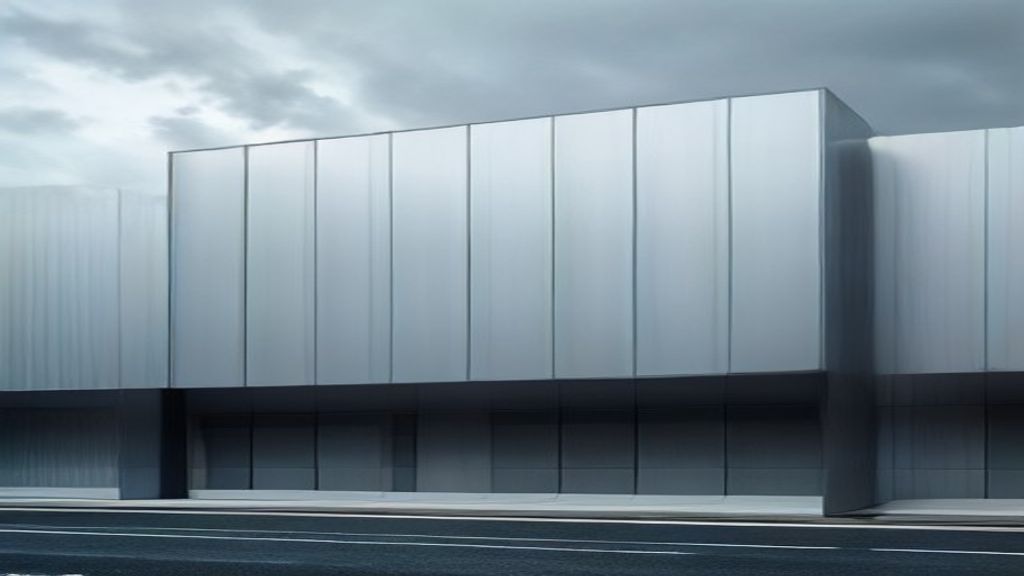
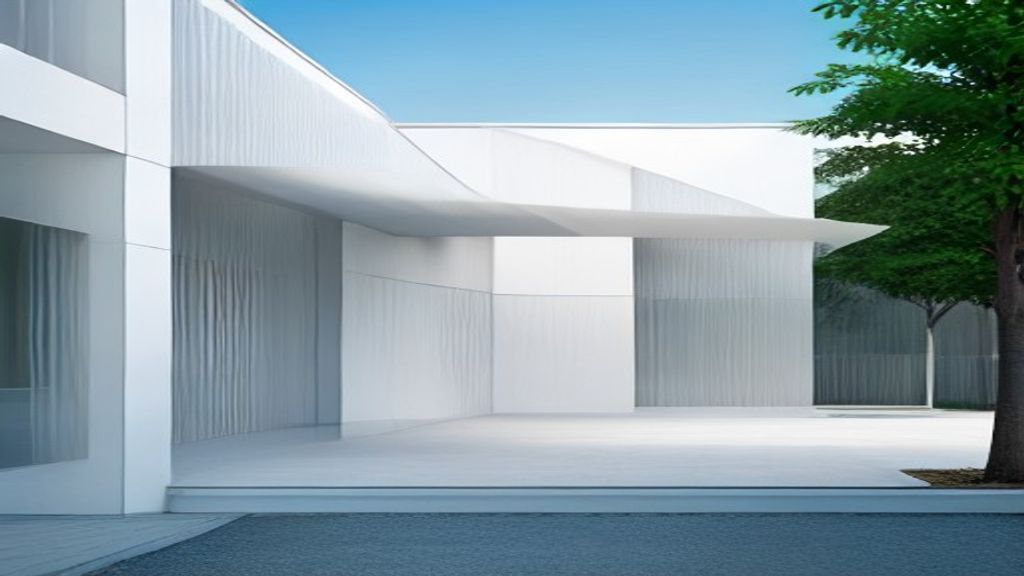
Metal Composite Material panels stay flat at large sizes without the weight of thick plate. Two thin metal skins are bonded to a core, so the wall reads as one metal plane. That is why they show up on elevations that will be photographed. The alternatives sit on the systems hub.
How is the panel built?
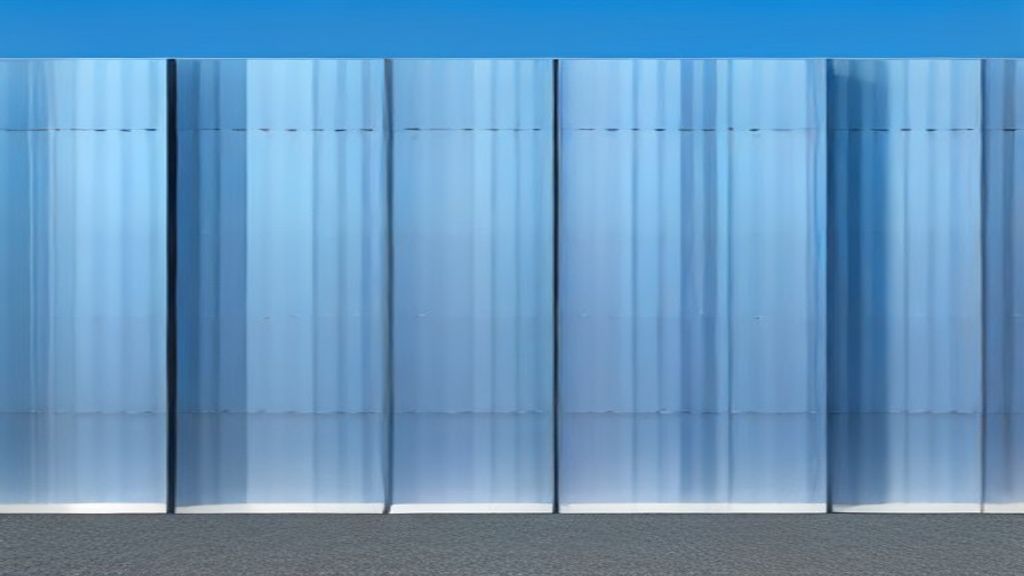
A typical panel bonds two skins of about 0.5 mm coil-coated aluminum to a core a few millimetres thick. The finished panel is commonly around 4 mm. Neither skin would be this stiff on its own — the composite works like a shallow sandwich beam, with the skins taking the stress and the core holding them apart. That geometry is where the weight-to-stiffness advantage comes from, and it is why the panel arrives dead flat from the press line.
Aluminum faces are the standard, and aluminum-faced panels are often called ACM, Aluminum Composite Material — a subset of the wider MCM family. Zinc, copper, stainless and titanium faces appear on signature projects at higher cost. The naming tangle between MCM, ACM and unrelated products that share the letters is untangled on what MCM means in cladding.
In this industry, MCM means Metal Composite Material, as defined by the Metal Construction Association. Other wall-finish industries use the same letters for different products. Metal Coverings writes the full term on first use.
Why does MCM own the flat monolithic look?
Every alternative gives something up. Solid aluminum wall panels thick enough to stay flat at large sizes are heavy and expensive; thin single-skin sheet oil-cans; folded cassettes hold their line but carry visible depth at the returns. MCM sits in the gap: large faces, thin joints, low weight, and a face that stays optically flat because the bonded core damps the local buckling that reads as oil canning on monolithic sheet.
That is the honest reason to specify it. When the design wants an unbroken metal plane — a fascia that photographs as one surface, an elevation with hairline joints — MCM is usually the only system that delivers it at commercial weight and cost.
How do flat sheets become facade panels?
The shop method is “rout and return.” The fabricator cuts a groove through the back skin and most of the core, leaving the face skin and a sliver of core intact, then folds the sheet along the groove. The fold produces a tray with returned edges and corners far crisper than press-brake folding of solid sheet, because the face skin bends around a tiny, controlled radius.
Two consequences belong in the spec. First, the routed fold removes metal from the back of the panel, so the folded edge is a face skin with little behind it — returns get corner reinforcement or fastening angles per the fabricator’s engineering. Second, every rout and every cut edge exposes the core. On fire-rated work the exposed-edge rules in the manufacturer’s tested details are not cosmetic: state where cut core edges may not remain open to weather or flame exposure, and require edge details that follow the manufacturer’s documentation. Field-cutting panels outside those rules voids the logic of the tested assembly.
Which core should you specify?
The facing metal rarely decides approval. The core does. Three families cover the market:
- Polyethylene (PE) cores — the original formulation: light, cheap, easy to fabricate, and combustible. PE-core panels contributed to rapid external fire spread in a series of widely reported high-rise facade fires, and many jurisdictions now restrict or prohibit them above certain heights.
- Fire-retardant (FR) cores — mineral-filled cores with reduced combustibility, the workhorse for facade projects that must pass assembly testing.
- Non-combustible mineral (A2-class) cores — the most conservative option, specified where local code or the client’s risk position demands the lowest core combustibility, at a cost and fabrication-stiffness penalty.
Name the core class in the spec. Then anchor fire language to the tested wall — panel, cavity, insulation and fixings together — not to any single layer. In the US, NFPA 285 is the test regime specifiers ask for on exterior walls with combustible components; in Europe the reference is EN 13501-1 classification. The fire performance page covers why the assembly, not the panel, is the unit of compliance, and the design and specification hub treats fire the same way.
Rainscreen or wet-seal?
MCM installs behind two different water-management logics, and the choice shapes cost, appearance and maintenance for the life of the wall.
Drained rainscreen (route-and-drain) systems hang the trays on a subframe with an open, ventilated cavity behind. Joints stay dry-open or gasket-baffled; water that enters drains out. This is the metal rainscreen cladding approach: more subframe, more money, no sealant cycle, and the crisp shadow-line joint most architects want.
Wet-seal (barrier) systems stiffen panel edges and gun sealant into every joint, making the panel face the water barrier. Lower first cost and a flush, sealed appearance — but the wall now depends on thousands of metres of field-applied sealant, and resealing becomes a scheduled maintenance obligation with access costs attached. On tall or hard-to-access elevations, price the second sealant cycle before calling wet-seal cheaper.
Joint pattern is the other system decision. Panel sizes are generous but not unlimited — coil widths and handling set the stock, and flatness expectations set the practical maximum. Draw the joint grid on full elevations early, align it with openings, and require shop drawings that show it; a joint that lands a few centimetres from a window jamb reads as an error forever. The Whole Building Design Guide metal panel wall systems guidance applies: the panel is one layer of a coordinated wall.
When does solid plate beat MCM?
MCM is not the default answer, and it loses on three fronts.
Impact. Thin skins over a soft core dent under concentrated load and the dent stays. At building bases, loading docks, transit platforms and anywhere the public touches the wall, solid plate — or a metal cassette folded from solid stock — takes abuse that would scar MCM.
End of life. A solid aluminum panel is a single recyclable metal. A composite must have its skins separated from a bonded core before either stream is clean, which complicates recycling in practice. Projects with strong circularity requirements increasingly write this into material selection.
Fire conservatism. Where the client wants metal-only construction with no combustible or filled core in the wall at all, solid sheet or plate ends the conversation.
If budget dominates and a profile is acceptable, steel wall cladding in profiled single-skin form is usually cheaper than any of the above. The map across materials, systems and applications is the complete metal wall coverings guide.
What documentation should you require?
MCM is a system you approve on paper before you see it on the wall. The submittal package that protects the project:
- Core certification — the manufacturer’s declaration of core class for the material actually delivered, not a generic brochure line. Counterfeit and substituted-core stock has been a real enforcement concern in this market; traceability is the defense.
- Tested-assembly evidence — the test report or engineering judgment covering the wall as detailed on this project, where code requires it: same core class, cavity, insulation and fixing logic.
- Fabricator’s rout-and-return details — fold radii at routs, corner reinforcement, edge closure, and where exposed core edges are permitted.
- Joint-system data — gasket or sealant products, movement accommodation, and for wet-seal walls the expected resealing interval in the maintenance manual.
- Finish warranty terms — coil-coating warranties carry exposure and slope conditions worth reading before the color is locked.
Specify MCM when flatness, panel size and weight drive the elevation and the core-and-assembly paperwork will be enforced. Where those conditions fail — impact zones, metal-only fire positions, circularity mandates — move to solid sheet, plate or cassette systems and let the commercial facade read change with them.
Specification checklist
- Name the core class — fire-retardant or non-combustible mineral — and state where polyethylene cores are not acceptable.
- Require documentation of the tested wall assembly where code applies, not panel-only literature.
- Require core certification or a manufacturer's declaration traceable to the delivered material.
- State the joint system — drained/back-ventilated rainscreen or wet-sealed — and who maintains sealants.
- Define edge treatment at rout-and-return folds, including where cut core edges may not remain exposed to weather.
- Set panel flatness expectations and joint width and alignment tolerances, benchmarked at a mockup.
- Require shop drawings showing the joint pattern on full elevations, coordinated with openings.
- Require isolation between dissimilar metals at the subframe and fasteners.
Frequently asked questions
What does MCM stand for in wall cladding?
In the architectural metal wall industry, MCM stands for Metal Composite Material: a panel made of two metal skins bonded to a core. Other industries use the same abbreviation for unrelated products, so this site always writes the term out in full on first use.
Are Metal Composite Material panels safe in terms of fire?
It depends on the core and the tested wall assembly. Panels with fire-retardant or mineral cores are widely used under modern codes, while older polyethylene-core panels are restricted in many jurisdictions. The governing answer always comes from the tested assembly and the local code, not the brochure.
What is rout-and-return fabrication?
The fabricator cuts a V- or square-bottomed groove through the back skin and most of the core, leaving the face skin intact, then folds the panel along that groove into a tray with returned edges. It produces very crisp corners from flat stock and is the standard way MCM sheets become facade panels.
Do MCM panels dent easily?
More easily than solid plate. The face skin is thin metal over a relatively soft core, so concentrated impact — ladders, carts, hail in severe climates — can leave permanent marks. At impact-prone locations such as building bases and loading areas, consider solid plate or add protection.
How big can an MCM panel be?
Sheet stock is limited by coil width and standard production lengths, and the practical panel size is further limited by handling and by how flat the face must read. Very large panels can still show waviness in raking light. Confirm available sheet sizes and recommended maximum panel dimensions with the manufacturer and fabricator.
What is the difference between a wet-seal and a rainscreen MCM system?
A wet-seal system closes every joint with sealant and relies on that seal as the water barrier. A drained rainscreen leaves joints open or baffled and manages water in a ventilated cavity behind the panels. Rainscreens cost more up front but remove the resealing cycle; wet-seal is cheaper initially but the sealant becomes a permanent maintenance obligation.
Sources
- Metal Composite Material — Metal Construction Association Accessed August 25, 2026.
- Metal Panel Wall Systems — Whole Building Design Guide Accessed August 27, 2026.
- NFPA 285 Standard Development — National Fire Protection Association Accessed August 27, 2026.